
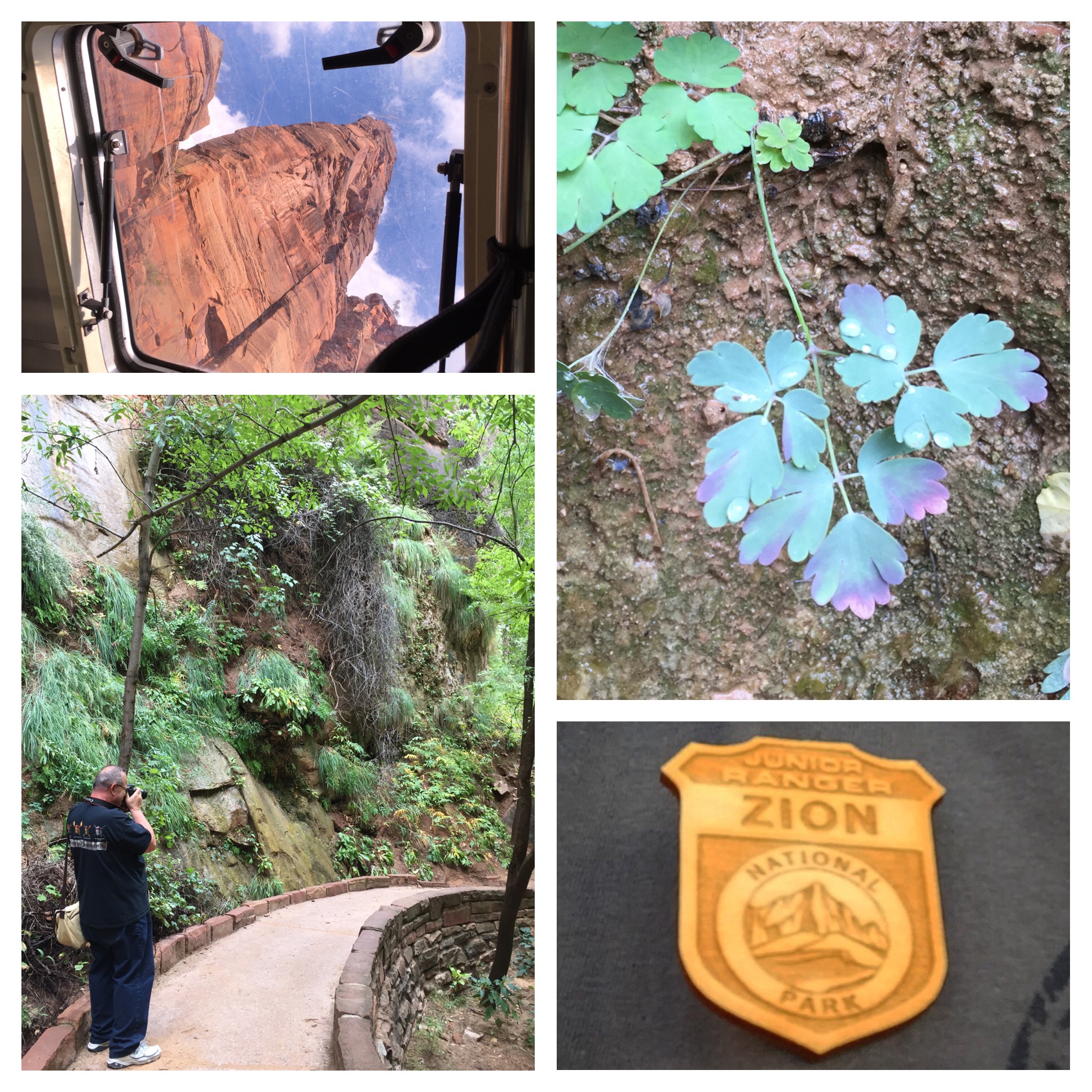
We took the Park shuttle to the stop for the Riverwalk. The shuttle bus had special windows in the ceiling do you could see the high cliffs as you traveled the canyon. One cool feature of the Riverwalk were the areas where water seeped through the porous sandstone. With this source of water, plants are able to grow from cracks and ledges in the cliff faces. These formed hanging gardens with various flowers and leaves. One plant caught our attention because of the delicate purple hues blended with the green.
I earned my Zion Junior Ranger badge by completing 14 tasks including attending a Ranger talk (one of the highlights) and other awareness activities. The challenge made my visit more interesting. I have always found I work better when there is a goal to achieve.

Along with the rains comes the danger of flash floods. The Virgin River that runs through the canyon usually has a current of 40 cubic feet/second at this time of the season. The night we arrived, the flow was measured at 2,000 cu ft/sec. We were hoping to hike The Narrows, where the canyon walls get very deep and close together, but the Rangers (and common sense) closed the Narrows on the day we were hiking in the Park. We did the Riverwalk which is the mile of paved trail that leads up to the Narrows. It was a great walk and we even saw a tarantula. Apparently this is the time they come out looking for a mate.

We drove into the Park after a day of rainy weather. My expectations of good weather were very low, but I found out that visiting Zion in the rain added something to the experience rather than taking away. We walked to the Lower Emerald Pool because it was a short, easy trail near the Zion Lodge. The waterfall at the end was much larger and more impressive because of the rains. The sun was starting to shine through the clouds giving dramatic lighting to the already spectacular canyon walls. We boarded a guided tram ride That gave us an overview of the Park.

Just a little lower in elevation than Bryce Canyon was Fairyland Canyon. The hoodoos were more visible in the fog. Hoodoos are formed by erosion caused when water soaks into the sandstone, freezes, and expands (hydrogen bonding in action.)

Back in Red Canyon, below the clouds, we had a good photo op with Smokey Bear and then a short hike up Hoodoo Trail. The two little formations on top of the canyon are named “salt & pepper.”

Bryce Canyon is known for its natural amphitheater filled with towering “hoodoos” (eroded sandstone columns with beautiful layers of color.) We had a glimpse of a few in Red Canyon on the way up to Bryce Canyon. Unfortunately, the high altitude (over 8,000 feet) meant we were in the clouds. The lodge where we stopped for lunch was fogged in. We walked to the edge of the canyon but could see nothing except white fog.
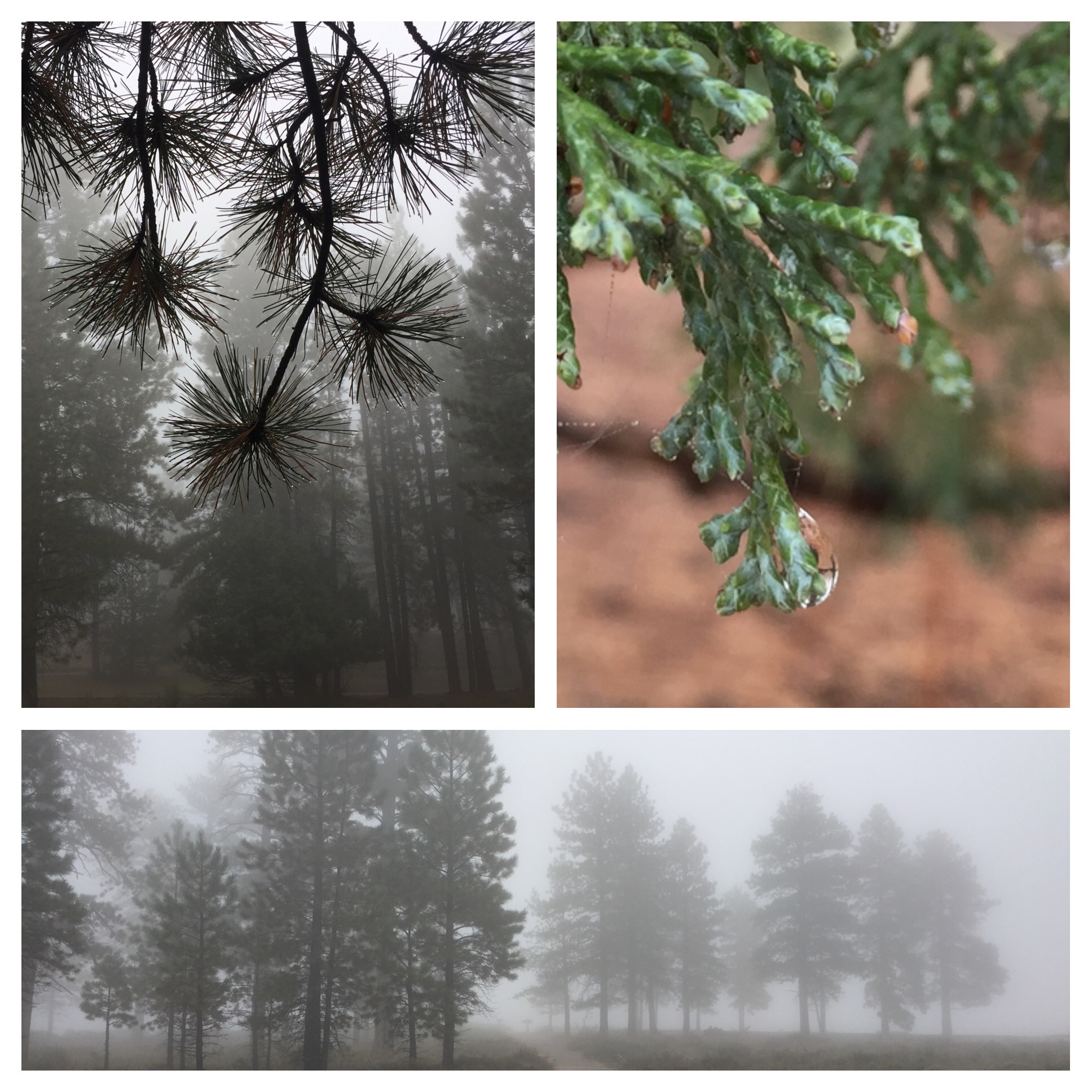
The walk to and from the canyon rim, however, was beautiful in the fog and light rain.